A good bouquet can look awkward in the wrong vase. Stems flop over the rim, flowers disappear inside the neck, or a tall arrangement tips over the moment someone brushes past the table. Nine times out of ten the problem is not the flowers but the vase size: its height compared with the stems, and the width of its opening.
This guide gives you one simple rule to start with, a size chart you can save, and practical advice for every common situation: bud vases for a single stem, medium vases for a supermarket bouquet, and tall floor vases for branches and pampas grass. You will also find which height works on a dining table, a mantelpiece or the floor, and how to group several vases without the result looking cluttered.
The quick answer: the one-and-a-half rule
The most useful rule of thumb in flower arranging is easy to remember: your flowers should stand about one and a half to two times the height of the vase. In other words, the vase should be roughly a third to two-fifths of the total height of the arrangement.
A 20 cm vase therefore suits stems of 30 to 40 cm above the rim; a 30 cm vase suits an arrangement of 45 to 60 cm above it. Go below that ratio and the bouquet looks squat and crowded; go well above it and it starts to look spindly and becomes top-heavy. The rule is a starting point rather than a law: airy flowers such as cosmos or grasses can go taller, dense heads such as hydrangeas sit better a little lower.
Vase sizes at a glance
Use this chart to match a vase height to what you want to put in it and where it will stand. Heights refer to the vase itself, not the arrangement.
| Vase height | Best for | Typical stems | Where it works |
|---|---|---|---|
| Under 15 cm | A single stem, a sprig of herbs, a few short flowers | 15–25 cm | Bedside table, windowsill, desk, bathroom shelf |
| 15–25 cm | Small bouquets, tulips, ranunculus, garden flowers | 25–45 cm | Kitchen table, side table, bookshelf |
| 25–35 cm | Classic bouquets, roses, peonies, mixed supermarket bunches | 40–60 cm | Dining table, sideboard, hallway console |
| 35–50 cm | Long stems, eucalyptus, lilies, gladioli | 55–90 cm | Console, mantelpiece, large sideboard |
| Over 50 cm | Branches, pampas grass, dried arrangements | 80 cm and over | Floor, next to a sofa, a fireplace or a staircase |
How to measure your flowers and your vase
Before buying a vase, measure what you usually buy. Lay a typical bunch on the kitchen counter and measure from the cut end to the top of the flower heads, then subtract the few centimetres you will trim on the diagonal. Take a third to two-fifths of that length: that is the vase height you are looking for.
For an existing vase, measure its inside depth as well as its outside height. A vase with a thick base can be 25 cm tall but only 20 cm deep inside, which changes how far the stems go in and how much water it holds. Then measure the opening: the width of the neck decides how the stems fall, which we cover in a section of its own below.
Bud vases: under 15 cm
Bud vases are made for one stem, or two or three very short ones. They are the easiest way to bring a little life into small spaces: a single rose on a bedside table, a sprig of rosemary by the hob, a cutting rooting in water on a windowsill. Because they hold so little, they also suit flowers that are past their best, when you cut the stems down to save the heads.
A narrow neck matters more than the height here: it keeps a single stem upright instead of letting it lean against the rim. Bud vases also look better in groups than alone. Line up three of different heights and shapes, keep one thing in common (clear glass, or the same colour), and put one stem in each.

Vintage Glass Propagation Vase
Bulbs 10 × 7.2 cm
31,90 €43 €

White Ceramic Bud Vase
H 7–13 cm
From24,90 €33 €

Glass Ball Vase
Ø 6 cm · H 5 cm
From28,90 €39 €

Glass Propagation Vase with Wooden Stand
H 13.5–19.5 cm · W 11.5 cm
From24,90 €33 €
Find more in our bud vases collection.
Medium vases: 15 to 35 cm
This is the size most homes need most often. A vase between 20 and 30 cm handles the average shop-bought bouquet, which is usually 40 to 60 cm long once trimmed. If you only buy one vase, choose something around 25 cm tall with a medium opening of 8 to 10 cm: it will suit tulips, roses, a mixed bunch and a few branches of eucalyptus.
Shape changes the effect as much as height. A round or bubble vase makes stems splay out into a soft, full shape; a straight cylinder keeps them upright and structured; a vase that narrows at the top gathers the stems and lets the heads open out above. Glass shows off the stems and the water, so keep it clean and change the water often; ceramic hides them, which is more forgiving with mixed stems.

Sculptural Glass Vase
H 20.5 to 21.5 cm
From72,90 €97 €

Striped Glass Vase
H 16 to 20 cm
From30,90 €41 €

Sculpted Ceramic Vase
H about 9 to 19 cm
From24,90 €33 €

Test-Tube Wall Vase
From34,90 €47 €
See all our glass vases and ceramic vases.
Tall and floor vases: 40 cm and over
Tall vases change the scale of a room. Placed on the floor, a vase of 40 cm or more filled with branches, dried grasses or pampas fills an empty corner or balances a tall piece of furniture without taking any surface space. On a console or a mantelpiece, a 35 to 50 cm vase gives height to an arrangement and draws the eye upwards.
Stability is the main thing to check. A tall vase with long, heavy branches can tip over easily, especially if it is light or narrow at the base. Choose a heavy ceramic piece, or add a layer of sand, gravel or pebbles at the bottom. For dried flowers you do not need water at all, which makes rattan or unglazed ceramic floor vases a good option.

Vintage Galvanized Metal Vase
H 19 cm · W 14 cm
75,90 €101 €

White Ceramic Dried-Flower Vase
H 12–16 cm
From24,90 €33 €

Wood and Glass Propagation Vase
H 18 cm · W 10 cm
40,90 €55 €

Retro Tinted Glass Vase
H 25 cm · Ø 10 cm
54,90 €73 €
Browse our floor vases and vases for dried flowers, or read our guide to styling a large floor vase.
The opening matters as much as the height
Two vases of the same height can give completely different results because of the width of their neck.
- Narrow neck (under 5 cm): holds one to five stems upright. Ideal for bud vases, single stems and tall branches.
- Medium opening (5 to 10 cm): lets a bouquet open slightly while keeping it together. The most versatile choice.
- Wide opening (over 10 cm): stems spread out and lean. Good for generous, loose bouquets, but you need more flowers to fill it.
A trick for wide vases: cross the stems in the water as you add them, so that each new stem rests against the others. This builds a natural grid that holds the arrangement in place. You can also make a grid on top of the vase with clear tape before adding flowers.
Flower by flower: which vase size?
Tulips
Tulips keep growing after they are cut, often by several centimetres, and bend towards the light. Choose a vase about half their height, with straight sides, so they have support as they stretch.
Roses
A dozen long-stemmed roses sit best in a vase of 25 to 30 cm with a medium opening. For garden roses with short stems, a low, wide bowl or a bud vase works better.
Peonies and hydrangeas
Their heavy heads need a stable vase. Choose something wide and 20 to 25 cm tall, and keep the stems fairly short so the heads rest on the rim.
Eucalyptus and branches
Long, light and structural, they look best in a tall, narrow vase of 30 cm and more, or a floor vase for longer branches.
Pampas grass and dried flowers
Plumes are often 80 cm to over a metre long, so they need a vase of 40 cm or more, ideally heavy at the base. No water is needed. Our guide to arranging dried flowers goes into more detail.
Choosing a vase size by room and surface
- Dining table: keep the whole arrangement under about 35 cm, or above eye level, so guests can see each other across the table. Low bowls and bud vases in a row work well.
- Coffee table: a low, wide vase is visible from the sofa without blocking the view.
- Console and sideboard: height is welcome here. A vase of 35 cm or more, or a group of three heights.
- Mantelpiece: one tall vase off-centre, balanced by candle holders, or a row of small vases.
- Shelves: mind the shelf above. Bud vases and small vases fit best; leave at least a hand's width of space above the flowers.
- Floor: 40 cm minimum, more in a room with high ceilings, and always stable.
Grouping vases: the rule of three
Grouping vases is the simplest way to make a display look styled rather than random. Pick three vases of clearly different heights (tall, medium, low), keep one element in common, such as the material, the colour or the finish, and vary the shapes. Odd numbers almost always look more natural than pairs.
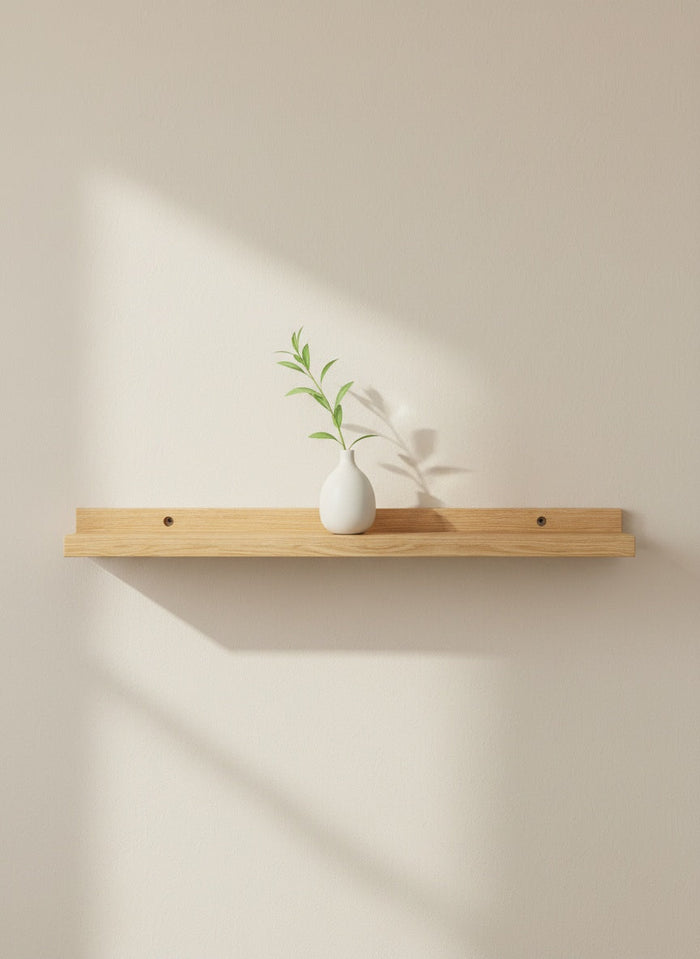
Place the tallest at the back or to one side, then step the others down. Leave a little space between them, and put flowers in only one or two: an empty sculptural vase next to a full one adds contrast. For more ideas, see our guide to styling a wall shelf and our decorative vases.
Frequently asked questions
What size vase do I need for a dozen roses?
A vase of 25 to 30 cm with a medium opening of 8 to 10 cm suits a dozen long-stemmed roses. Trim the stems so the heads sit 1.5 to 2 times the height of the vase.
How tall should a floor vase be?
At least 40 cm, and more in a room with high ceilings. Choose a heavy or weighted vase so tall branches or pampas grass do not tip it over.
What size vase is best for tulips?
Choose a vase about half the height of the tulips, with straight sides. Tulips keep growing after cutting, so the vase needs to support them as they stretch.
Should flowers be taller than the vase?
Yes. As a rule, flowers should stand one and a half to two times the height of the vase. Lower arrangements look squat; much taller ones look spindly and can tip over.