A wall shelf is one of the quickest ways to add storage and personality to a room, but only if it is level, secure and at the right height. A floating shelf that sags, a bracket that pulls out of the plaster or a shelf hung so high that nothing on it can be seen are all common, and all avoidable.
This guide takes you through hanging a wall shelf step by step: identifying your wall, choosing the right fixings, finding the right height above a sofa, a bed or a desk, and then styling the shelf so it looks considered rather than cluttered. It covers floating shelves with hidden brackets, shelves on visible brackets, rope and hanging shelves, and corner shelves.
Before you start: know your wall
The single most important step is identifying what you are fixing into. The same shelf needs completely different fixings depending on the wall.
| Wall type | How to recognise it | Fixing to use | Good for |
|---|---|---|---|
| Solid brick or block | Hard, cold, dust is red or grey when drilling | Masonry screws or screws with brown or red wall plugs | Heavy shelves, books |
| Plasterboard on timber studs | Sounds hollow between studs, solid every 40–60 cm | Wood screws straight into the studs | Most shelves, if you hit the studs |
| Plasterboard between studs | Hollow sound, thin board | Spring toggles, metal cavity anchors | Light to medium loads |
| Tiles | Kitchens and bathrooms | Tile drill bit, then plugs suited to the wall behind | Bathroom and kitchen shelves |
A stud finder costs little and saves a lot. Before drilling anywhere, also check for hidden pipes and cables with a detector: never drill directly above or below a socket or a switch.
What you need
- A spirit level, ideally 60 cm or longer, or a laser level
- A pencil, a tape measure and masking tape
- A drill with masonry, wood or tile bits as needed
- The right wall plugs or cavity fixings for your wall
- A screwdriver or a drill with a screwdriver bit
- A stud and pipe detector
How high to hang a wall shelf
There is no single correct height, but a few reference points make it easy to get right.
- Above a sofa: 20 to 25 cm above the top of the back, so heads do not touch it and it still reads as part of the seating area.
- Display shelf on its own: around 145 to 155 cm from the floor, close to eye level, so objects can be seen.
- Above a desk: 30 to 45 cm above the desk top, high enough for a monitor, low enough to reach.
- Above a bed: 50 to 60 cm above the mattress, and only for light objects.
- Bathroom: 20 to 30 cm above a basin or a toilet cistern, with nothing heavy or breakable.
- Kitchen: 45 to 50 cm above the worktop, the same height as wall cupboards.
How to hang a floating shelf, step by step
- Mark the height. Draw a light pencil line where the top of the bracket will go, then check it with the spirit level.
- Find the studs or check the wall. On plasterboard, mark the studs along your line; aim to use at least two.
- Mark the holes. Hold the hidden bracket against the line, level it, and mark each screw hole.
- Drill. Use the bit size given for your plugs. Drill straight, not at an angle, and clear the dust from each hole.
- Fix the bracket. Insert the plugs, screw the bracket on loosely, check the level once more, then tighten.
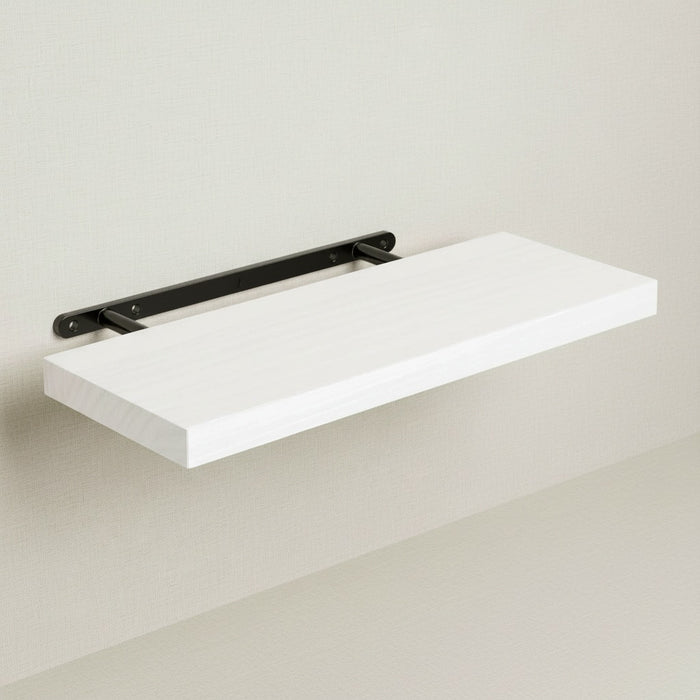
- Slide on the shelf. Push the shelf over the rods until it sits flush against the wall. Some shelves have a small grub screw underneath to lock them in place.
- Check and load gradually. Put the heaviest items close to the wall and near the brackets.

Floating Shelf with Hidden Bracket
40 × 15 × 1.5 cm
From57,90 €77 €

Deep Floating Shelf
42 × 16 × 2 cm
From54,90 €73 €

Slatted Solid Wood Wall Shelf
40.6 × 15 cm
From56,90 €76 €

Rustic Floating Wall Shelf
40 × 15 cm
From52,90 €71 €
See our full range of floating shelves and wooden wall shelves.
Rope, hanging and no-drill shelves
Hanging shelves on ropes need only one or two fixing points at the top, which makes them easier to install and gentler on the wall. Use a hook or screw rated for the load and make sure both ropes are the same length so the shelf hangs level. They suit plants and light decorative pieces rather than books.
No-drill shelves use adhesive strips or rails. They are ideal for renters, but check the maximum weight on the packaging and use them only on smooth, sound surfaces such as tiles or gloss paint.

Wooden Floating Shelf
29 to 42 × 15 cm
From42,90 €57 €

Small Floating Wood Shelves, Set of 4
L approx. 13 cm (5 in)
From39,90 €53 €

No-Drill Wooden Wall Shelf
L 30, 40 or 50 cm
From53,90 €72 €
Browse our hanging shelves and corner shelves.
How much weight can a wall shelf hold?
The limit is almost always the fixing and the wall, not the shelf. A floating shelf screwed into studs or solid brick can hold far more than the same shelf on plasterboard plugs. As a rule of thumb, decorative objects, small plants and a few books are fine on most fixings; full rows of books need solid wall or studs and two fixing points at least every 60 cm. Always follow the load given for each product and fixing.
How to style a wall shelf
Once the shelf is up, the way you arrange it makes all the difference.
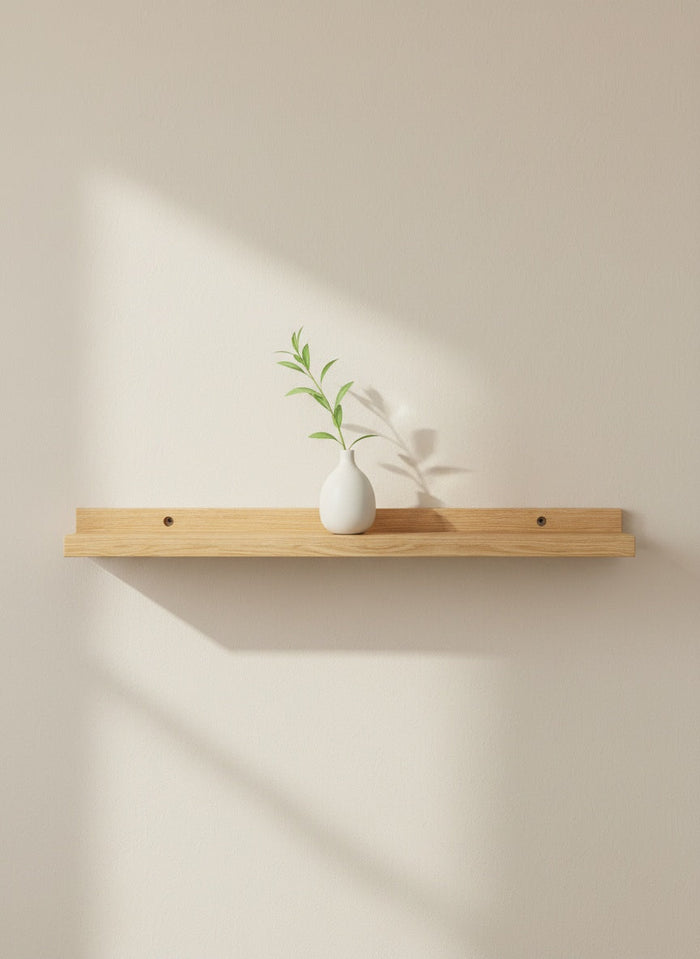
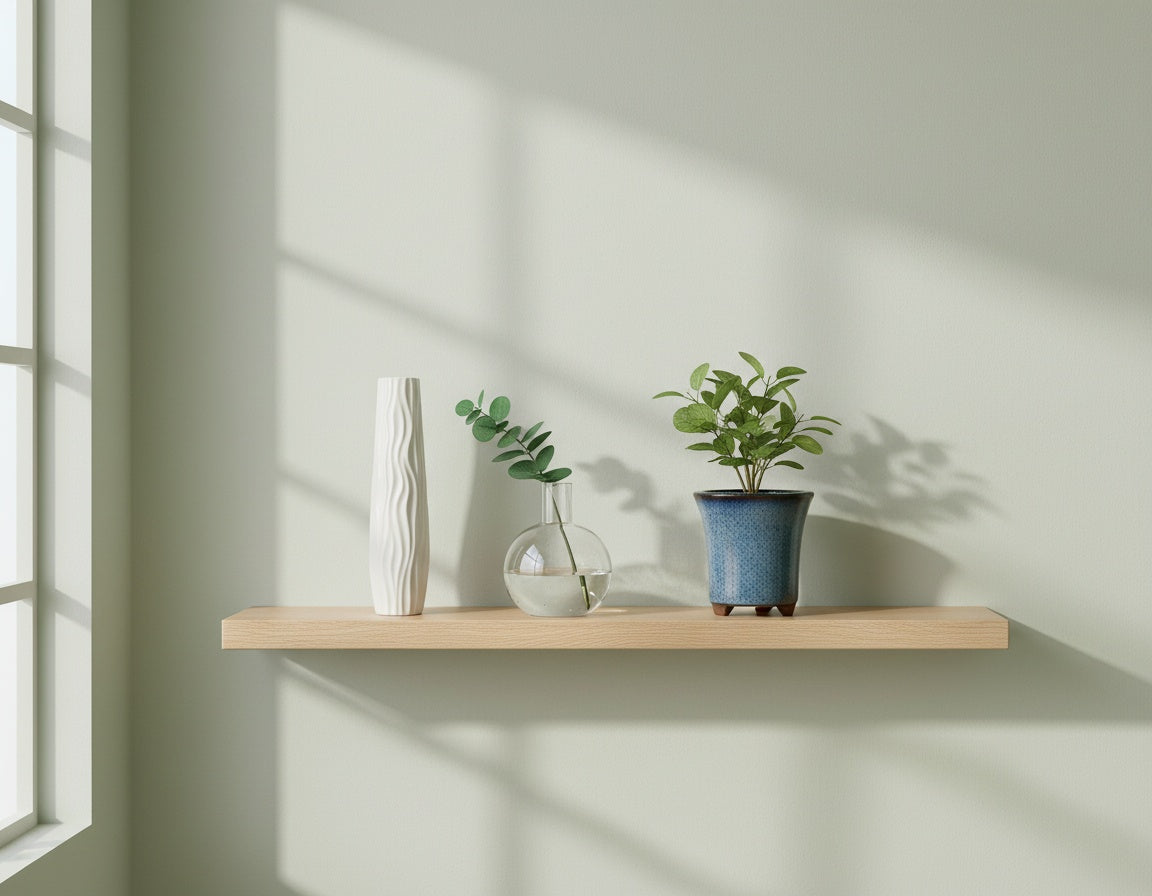
- Three heights: one tall piece, one low and round, one living thing such as a small plant.
- Odd numbers: groups of three or five look more natural than pairs.
- Leave space: keep about a third of the shelf empty so each piece can breathe.
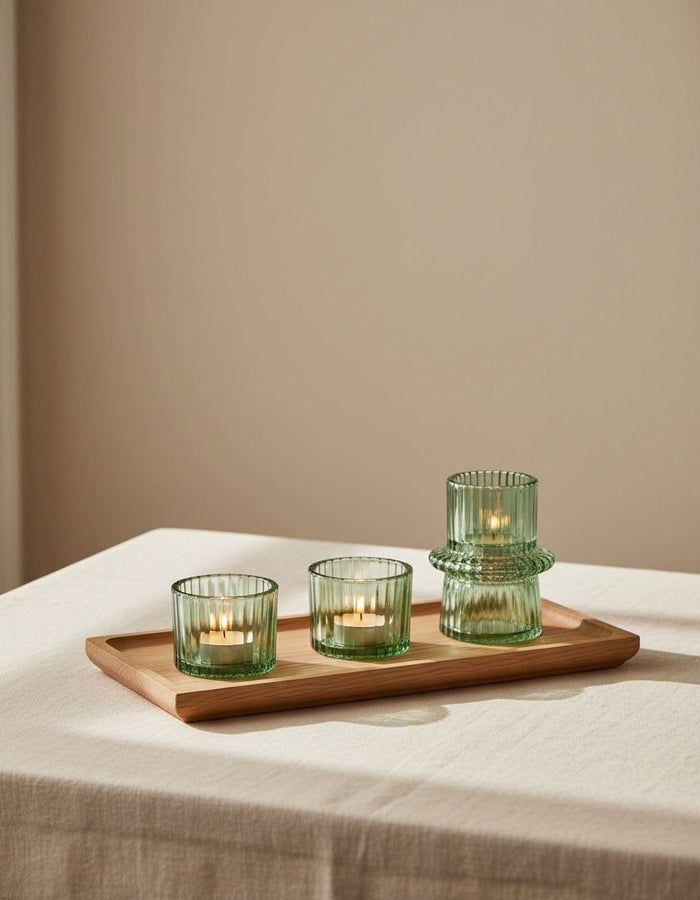
- Repeat a material: echo the wood of the shelf in a candlestick, or the glass of a vase in a votive.
- Layer: lean a small print at the back and place objects in front.

Glass Propagation Vase with Wooden Stand
H 13.5–19.5 cm · W 11.5 cm
From24,90 €33 €

Modern Ceramic Candlestick
Ø 9.5 cm · H 7.2 cm
From37,90 €51 €

Woven Straw Hanging Planter
H 10–12 cm
From24,90 €33 €

Glass Hurricane with Wooden Base
H 10.5 cm · Ø 8 cm
From24,90 €33 €
Our vase size guide explains how to choose vases for a shelf, and our candle holder ideas show how to add warm light.
Wall shelf ideas, room by room
Living room
A long floating shelf above a sofa or a sideboard is the classic choice. Keep it a little shorter than the furniture below, about two thirds of its width, and centre it. For a more relaxed look, stagger two shorter shelves at different heights.
Kitchen
Open shelves keep everyday items within reach and break up a run of wall cupboards. Choose solid wood with a sealed finish that is easy to wipe, and keep heavy stacks of plates close to the brackets. Leave the top shelf for decorative pieces such as a small plant or a vase.
Bathroom
Choose materials that cope with humidity: sealed wood, bamboo or metal. A small shelf above the basin or the toilet holds towels, a candle and a plant. Keep glass and anything breakable out of reach of the bath.
Bedroom
A narrow shelf can replace a bedside table in a small room: hang it at the height of the mattress top, next to the bed. Above the bed, keep only light objects and fix the shelf firmly into studs or solid wall.
Hallway
A shallow shelf with hooks underneath holds keys, post and a small vase without taking floor space. Choose a depth of 10 to 15 cm so it does not catch shoulders.
Corners and alcoves
Corner shelves turn unused space into display. A set of three staggered floating corner shelves makes a lovely home for small plants. Alcoves either side of a chimney breast are ideal for several shelves at regular gaps of 30 to 35 cm.
Choosing the right depth and length
| Use | Depth | Length |
|---|---|---|
| Display, frames, small vases | 10–15 cm | 40–80 cm |
| Books | 20–25 cm | Up to 90 cm between supports |
| Kitchen crockery | 25–30 cm | Supports every 60 cm |
| Plants | 15–25 cm | Depending on pot size |
The deeper a floating shelf, the more leverage the load has on the fixings. If you need a deep shelf for heavy items, choose visible brackets or make sure the hidden bracket goes into studs or solid masonry.
Common mistakes
- Trusting the eye instead of the level: walls and ceilings are rarely straight; always use a level.
- Using the plugs that came in the box on every wall: check they suit your wall type.
- Hanging too high: shelves above about 180 cm are hard to reach and their contents cannot be seen.
- Overloading one end: spread the weight and keep heavy items near the brackets.
Frequently asked questions
How high should a shelf be above a sofa?
About 20 to 25 cm above the top of the sofa back, so heads do not touch it and it still belongs to the seating area.
Can I hang a floating shelf on plasterboard?
Yes, ideally by screwing into the timber studs. Between studs, use spring toggles or metal cavity anchors and keep the load light.
How much weight can a floating shelf hold?
It depends mostly on the wall and fixings. Into studs or solid brick it can hold books; on plasterboard plugs, keep to decorative objects. Always check the product and fixing limits.
What height should a display shelf be?
Around 145 to 155 cm from the floor, close to eye level, so the objects on it can be seen.