A large floor vase is one of the simplest ways to change how a room feels. It fills an empty corner, balances a tall piece of furniture, softens a staircase and adds height without taking a single centimetre of shelf or table space. Yet floor vases are also easy to get wrong: too small and they look lost, too light and they tip over, too full and they turn into clutter.
This guide brings together twelve proven ways to style a floor vase, room by room, with the sizes that work, what to put inside, and the mistakes to avoid. Whether you have a bare hallway, a living room corner by the sofa or a fireplace you never use, you will find an idea that fits.
What makes a good floor vase
A floor vase is any vase designed to stand on the ground rather than on a surface. In practice that means a height of 40 cm or more, a base heavy or wide enough to stay stable, and a shape that still looks good from above, because you see a floor vase from a standing height rather than at eye level.
Three things matter more than anything else:
- Scale: in an average living room, 50 to 70 cm is the sweet spot. Under 40 cm, a vase on the floor reads as forgotten; in rooms with high ceilings you can go to 80 cm and beyond.
- Weight: ceramic and thick glass are naturally stable. Light vases need a layer of sand, gravel or pebbles in the bottom, especially with long branches.
- Silhouette: tall and slender for corners and narrow spaces, round and generous for open floor next to furniture.

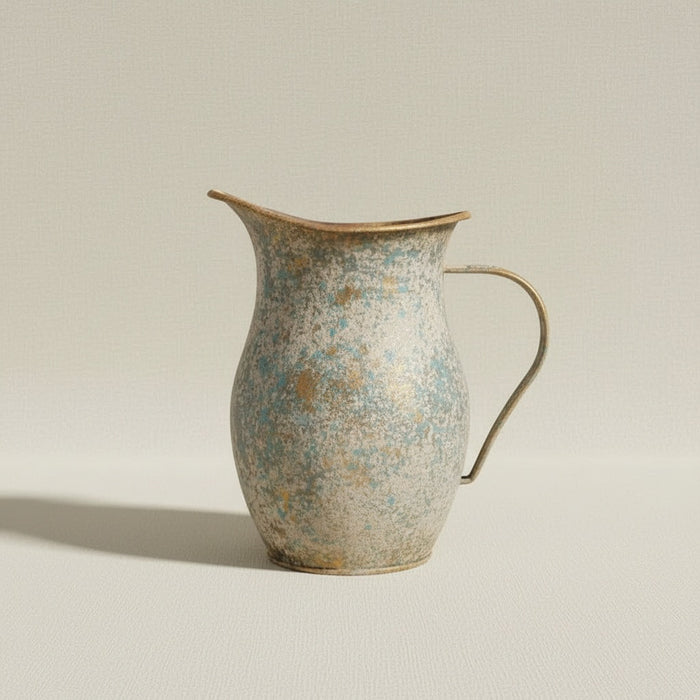
Vintage Galvanized Metal Vase
H 19 cm · W 14 cm
75,90 €101 €

Small Matte Ceramic Vase
H 5.5 to 16 cm
From24,90 €33 €

Glacier Glass Vase
H 25 cm · Ø 9.5 cm
From49,90 €67 €

Pomegranate Ceramic Vase
7.5 × 7.5 cm
From29,90 €40 €
Browse all our floor vases, or see our vase size guide for the rules on height and opening.
Floor vase sizes at a glance
Use this chart as a starting point. The right height depends on the ceiling, the furniture next to the vase and what you put in it.
| Vase height | Best spot | What to put in it | Arrangement height |
|---|---|---|---|
| 40–50 cm | Next to an armchair, a side table, a small hallway | Eucalyptus, a few branches, dried grasses | 80–100 cm |
| 50–70 cm | Living room corner, beside a sofa or a console | Pampas grass, olive or birch branches | 100–140 cm |
| 70–90 cm | Open-plan rooms, high ceilings, by a fireplace | Tall branches, palm leaves, large dried arrangements | 140–180 cm |
| Groups of 2–3 | Wide empty walls, a landing, an entrance | One filled, one or two empty sculptural vases | Varied |
The golden rule: one third vase, two thirds arrangement
The proportions that work on a table also work on the floor: the arrangement should be about one and a half to two times the height of the vase, so the vase makes up roughly a third of the total. A 60 cm floor vase therefore suits branches or pampas that reach 120 to 180 cm from the floor.
If the vase stands next to a sofa or an armchair, let the top of the arrangement rise well above the back of the seat, otherwise the two compete for attention. Next to a console, aim for the arrangement to finish at least 30 cm above the console top.
12 floor vase ideas, room by room
1. The living room corner
An empty corner is the classic spot. Choose a tall, slender vase of 60 cm or more and fill it with pampas grass or long dried branches. Light it with a floor lamp nearby or a candle lantern at its foot in the evening.
2. Beside the sofa
Place a generous, rounder vase at one end of the sofa instead of a side table. Keep it lower, 40 to 50 cm, with loose eucalyptus so it frames the seat without blocking anyone.
3. Either side of the fireplace
Two matching floor vases on either side of a fireplace create instant symmetry. In summer, when the fire is not in use, add a third smaller vase inside the hearth.
4. The hallway welcome
In a hallway, a single tall vase by the door or at the foot of the stairs gives a sense of arrival. Choose something narrow so it does not catch coats and bags.
5. At the turn of the stairs
A landing is often a forgotten space. A floor vase with branches softens the corner and draws the eye upwards.
6. Next to a console or sideboard
Stand a floor vase at one end of a sideboard and keep the top of the sideboard simple: a lamp, a stack of books, a bowl. The vase brings the height so the surface does not have to.
7. In the bedroom
One vase with dried grasses beside a chest of drawers or in a reading corner adds texture without the upkeep of fresh flowers.
8. Framing a window
A pair of tall vases either side of a large window frames the view, especially with airy grasses that catch the light.
9. The trio
Group three vases of different heights and shapes on the floor, in the same colour or material, and fill only one. The empty ones act as sculpture.
10. With a large plant
Place a floor vase next to a large plant in a basket. The mix of living green and dry texture looks natural and layered. See our large plant pots.
11. In an open-plan kitchen
A floor vase can mark the boundary between kitchen and living area, at the end of an island or next to a dining table.
12. Empty, as sculpture
A strong shape needs nothing inside. A rippled, twisted or textured ceramic vase can stand alone like a piece of art.
What to put in a floor vase
- Pampas grass: soft, light and long-lasting. Three to five plumes are enough; cut them at different lengths.
- Dried branches: birch, cotton, willow or bleached ruscus give height and a graphic line.
- Fresh branches: eucalyptus, olive or cherry blossom in season. Check the vase is watertight first.
- Palm and fan leaves: dried palm leaves make a bold, sculptural statement.
- Nothing at all: a beautiful vase can simply stand on its own.

Vintage Embossed Glass Vase
H 9 to 22 cm
From24,90 €33 €

White Ceramic Bud Vase
H 7–13 cm
From24,90 €33 €

White Ceramic Dried-Flower Vase
H 12–16 cm
From24,90 €33 €

Wood and Glass Propagation Vase
H 18 cm · W 10 cm
40,90 €55 €
See our vases for dried flowers and our guide on arranging dried flowers.
Choosing the material
Ceramic is the most stable and the most versatile: matte finishes look calm and natural, glazed or textured ones add character. Glass floor vases are lighter visually and show off branches in water, but they need cleaning and are best kept away from busy walkways. Rattan, seagrass and woven pieces bring warmth and suit dried arrangements, since they are rarely watertight.

Sculptural Glass Vase
H 20.5 to 21.5 cm
From72,90 €97 €

Striped Glass Vase
H 16 to 20 cm
From30,90 €41 €

Retro Tinted Glass Vase
H 25 cm · Ø 10 cm
54,90 €73 €

Nordic Glass Bud Vase
H 16 or 22 cm · Ø 6 cm
From24,90 €33 €
Floor vase styles for every interior
The same corner can feel completely different depending on the vase you choose. Match the vase to the character of the room rather than to the latest trend, and it will still look right in five years.
| Interior | Vase to choose | What to put in it |
|---|---|---|
| Scandinavian | Matte white or sand ceramic, simple shape | Pale pampas, bleached branches |
| Boho | Textured ceramic, woven or rattan-look finish | Pampas, palm leaves, bunny tails |
| Modern minimalist | Sculptural or twisted ceramic, clear or tinted glass | One graphic branch, or nothing |
| Cottage and period homes | Glazed ceramic, embossed or vintage glass | Seasonal branches, eucalyptus, dried hydrangeas |
| Industrial | Dark ceramic, smoked glass, galvanised metal | Dried grasses, willow, cotton stems |
If you are unsure, a matte ceramic floor vase in a warm neutral such as cream, sand or soft white is the safest choice: it suits almost every interior and works with both fresh and dried stems.
Caring for a floor vase arrangement
A floor vase is seen every day, often at close range, so a little care keeps it looking fresh.
- Fresh branches: change the water every two to three days and recut the stems at an angle each time. Remove any leaves that sit below the waterline, as they rot quickly.
- Dried stems: dust them every few weeks with a hairdryer on its coolest setting, held at a distance. Keep them out of strong sunlight, which fades the colours.
- Glass vases: a spoonful of rice and a little warm, soapy water, swirled around, cleans the inside of a tall vase that a brush cannot reach.
- Refresh with the seasons: keep the same vase and change what is inside: cherry blossom in spring, grasses in summer, rust-toned stems in autumn, pine and berried branches in winter.
Seasonal swaps are the easiest way to make a room feel new without buying anything big. A floor vase you love becomes a frame for whatever is in season.
How to choose the right floor vase in three steps
- Measure the space. Note the height of the furniture next to the spot and the ceiling height. Aim for a vase at least as tall as the seat of a sofa, and an arrangement that rises well above its back.
- Decide fresh or dried. Fresh branches need a watertight vase, ideally glass or glazed ceramic. Dried stems can go in any material, including woven pieces.
- Pick the silhouette. Slender for corners and hallways, rounded for open floor beside furniture, sculptural if the vase will stand empty.
Common mistakes to avoid
- A vase that is too small: below 40 cm, it disappears on the floor. When in doubt, go bigger.
- Overfilling: a floor arrangement looks better airy and a little sparse.
- Ignoring stability: weigh the base, especially in homes with children or pets.
- Too many vases: one statement vase per area is usually enough; groups work best as a deliberate trio.
- Blocking a walkway: keep at least 80 cm of clear passage in hallways and around doors.
For more ideas on combining heights, read our vase size guide and browse our decorative vases.
Frequently asked questions
How tall should a floor vase be?
At least 40 cm. In an average living room 50 to 70 cm works best, and in rooms with high ceilings you can go to 80 cm or more.
What do you put in a large floor vase?
Pampas grass, dried branches such as birch or willow, fresh eucalyptus or olive branches, dried palm leaves, or nothing at all if the vase has a strong shape.
How do I stop a floor vase from tipping over?
Choose a heavy ceramic or thick glass vase, or pour sand, gravel or pebbles into the bottom before adding tall stems.
Where should I put a floor vase?
In an empty corner, beside a sofa or a console, either side of a fireplace, by the front door or at the turn of the stairs.