A dried flower arrangement lasts for months, needs no water and brings soft texture and warm colour to a room all year round. But a bunch of stems pushed into a vase rarely looks as good as the pictures. The secret is not the flowers themselves but how you combine them, and the vase you put them in.
This guide explains how to arrange dried flowers in a vase step by step: the three types of stems every arrangement needs, the right proportions, which vase suits which bouquet, colour combinations that work, and how to keep a dried arrangement looking good for as long as possible.
The three families of stems
Every well-balanced dried arrangement mixes three roles. Think of them as the bones, the body and the details.
- Structure: tall, light stems that give height and movement. Pampas grass, bunny tails on long stems, dried branches, reeds, phalaris.
- Filler: airy volume in the middle. Gypsophila, limonium, broom bloom, dried ferns, oats.
- Focal stems: one or two stronger shapes or colours that catch the eye. Craspedia, dried roses, protea, lunaria (honesty), strawflowers.
A simple ratio to begin with: about half structure, a third filler, and a few focal stems in odd numbers.
How to arrange dried flowers, step by step
- Choose the vase first. Its height and opening decide the size of the arrangement.
- Cut the structure stems to about one and a half to two times the height of the vase, at different lengths so the top is not flat.
- Place them first, slightly crossed, so they lean outwards rather than standing straight up.
- Fill the centre with the airy stems, a little shorter than the structure, turning the vase as you go.
- Add the focal stems last, in odd numbers and off-centre, slightly lower than the filler.
- Step back and remove one or two stems. A dried arrangement looks better a little sparse than overloaded.
Which vase for which arrangement?
| Arrangement | Vase | Height | Why |
|---|---|---|---|
| A few pampas plumes | Tall, narrow or medium neck | 30–60 cm | Keeps the plumes upright and graphic |
| Full mixed bouquet | Medium, medium opening | 20–30 cm | Lets the bouquet open slightly |
| One or two stems | Bud vase | Under 15 cm | Shows off a single shape |
| Large floor arrangement | Heavy floor vase | 40 cm and over | Stability with long stems |
| Low table arrangement | Wide bowl or low vase | 10–15 cm | Stays below eye level |
Because dried flowers need no water, the vase does not have to be watertight: rattan, wood, unglazed ceramic and textured finishes all work. Stability matters more, so add sand or pebbles to light vases.
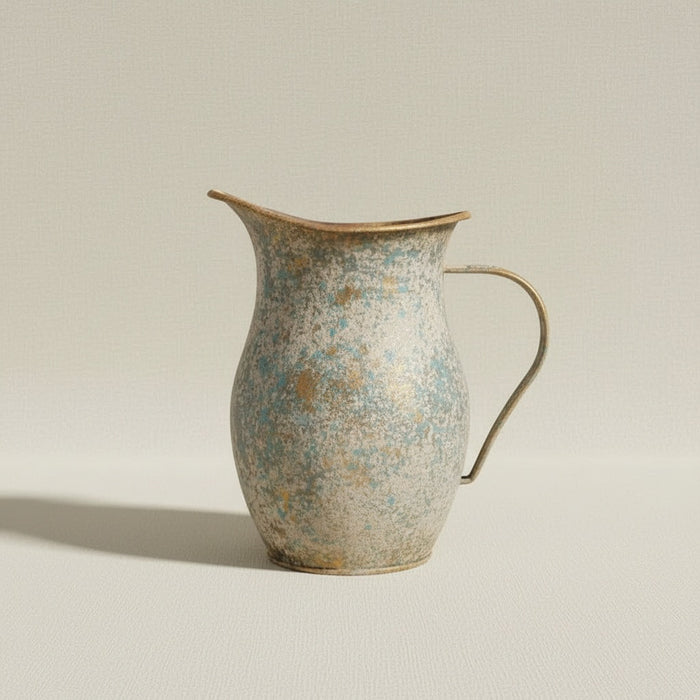
 Vintage Galvanized Metal Vase
75,90 €
 Vintage Embossed Glass Vase
24,90 €
 White Ceramic Dried-Flower Vase
24,90 €
 Small Matte Ceramic Vase
24,90 €
See all our vases for dried flowers and our vase size guide.
Pampas grass: getting it right
Pampas grass is the star of most dried arrangements, and also the stem people struggle with most.
- Prepare it: shake each plume outdoors to remove loose fluff, then mist it lightly with hairspray to fix it.
- Fluff it: a hairdryer on a cool setting, held upside down, opens up flattened plumes.
- Use fewer stems: three to five plumes in a tall vase look more elegant than a dense bunch.
- Mix tones: natural beige with a few bleached white or soft pink plumes adds depth.
 Retro Tinted Glass Vase
54,90 €
 Glacier Glass Vase
49,90 €
 Pomegranate Ceramic Vase
29,90 €
 Glass Bubble Vase
26,90 €
For larger pieces, see our floor vases and our guide to styling a floor vase.
Colour combinations that work
- Natural: beige, cream and sand. Calm, and easy to place in any room.
- Warm autumn: rust, terracotta, mustard and brown. Cosy from October to February.
- Soft blush: a neutral base with one muted pink or dusty mauve note.
- Green and white: preserved eucalyptus, white gypsophila and bleached grasses for a fresher look.
Echo the vase in the bouquet: a sand-coloured ceramic with beige grasses, an amber glass with rust tones, a white vase with bleached stems. The result feels calm and intentional.
Small arrangements and bud vases
Not every dried arrangement needs to be big. A single stem of lunaria, a few bunny tails or a sprig of dried lavender in a bud vase is perfect for a bedside table, a bathroom shelf or a desk. Group three bud vases of different heights for a more styled look.
 Nordic Glass Bud Vase
24,90 €
 Wood and Glass Propagation Vase
40,90 €
 Sculpted Ceramic Vase
24,90 €
 White Ceramic Bud Vase
24,90 €
Browse our bud vases.
The best dried flowers to start with
| Stem | Role | Look | Lasts |
|---|---|---|---|
| Pampas grass | Structure | Soft, feathery plumes | 1–3 years |
| Bunny tails (Lagurus) | Structure or filler | Small fluffy heads | 1–2 years |
| Eucalyptus (preserved) | Filler | Soft green leaves | 1–2 years |
| Gypsophila | Filler | Tiny white clouds | About a year |
| Lunaria (honesty) | Focal | Translucent silver discs | 1–2 years |
| Craspedia | Focal | Yellow balls | 1–2 years |
| Dried roses | Focal | Deep, vintage colours | About a year |
| Lavender | Filler or bud vase | Fragrant purple spikes | About a year |
Drying your own flowers
You can dry many garden and bouquet flowers yourself. The simplest method is air drying:
- Pick or choose flowers just before they are fully open, and remove most of the leaves.
- Tie them in small bunches of five to ten stems with string or an elastic band.
- Hang them upside down in a dry, dark, airy place such as a cupboard, a loft or a spare room.
- Leave them for two to three weeks, until the stems snap rather than bend.
Hydrangeas, lavender, roses, statice, strawflowers, grasses and seed heads all dry well this way. Hydrangeas can also be dried standing in a vase with a few centimetres of water, left to evaporate slowly.
Where to display dried flowers
- Mantelpiece: a long, low arrangement or three vases of different heights.
- Dining table: a low arrangement in a wide vase, so guests can see each other.
- Hallway console: a tall vase with pampas, framed by a lamp or a mirror.
- Bathroom: only if well ventilated; choose sturdy grasses rather than delicate flowers.
- Bedroom: a bud vase with lavender on the bedside table.
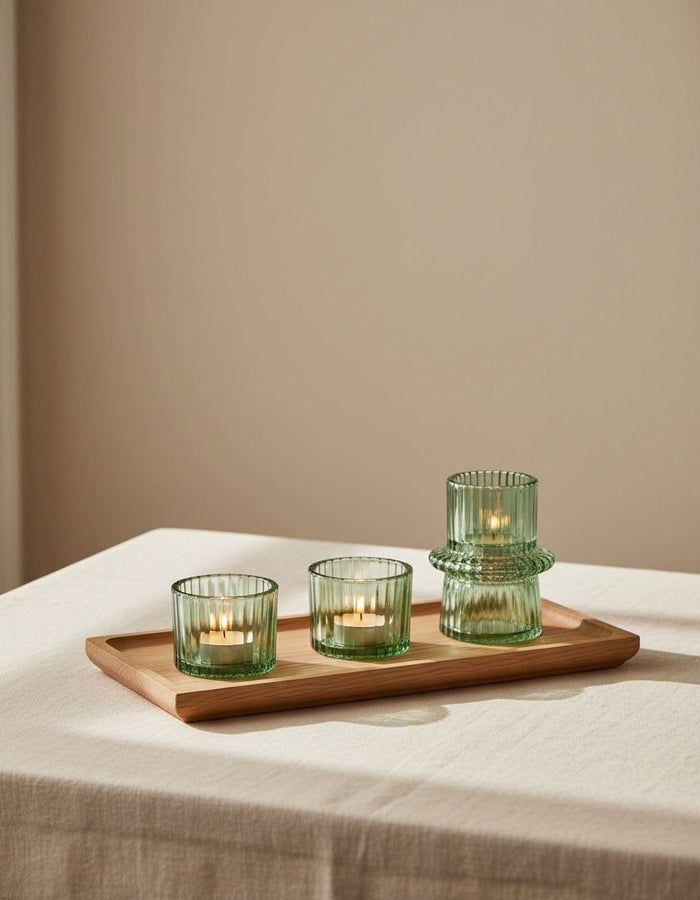
Pair your arrangement with warm candlelight for a cosy evening look, keeping flames well away from dried stems, which are very flammable.
How to make dried flowers last
- Keep them out of direct sunlight: UV light fades colours quickly.
- Avoid damp rooms: steamy bathrooms without ventilation can make stems droop or go mouldy.
- Dust gently: use a hairdryer on its coolest, lowest setting, or a soft make-up brush.
- Refresh rather than replace: swap a few focal stems each season to give the arrangement a new look.
Well cared for, a dried arrangement can last a year or more. For candle ideas to pair with your bouquet, see our candle holder decorating ideas.
Frequently asked questions
How do you arrange dried flowers in a vase?
Place tall structure stems first, then airy filler in the middle, and finish with a few focal stems in odd numbers, slightly off-centre.
How long do dried flowers last?
Kept out of direct sunlight and damp, a dried arrangement can last a year or more.
What vase is best for dried flowers?
It does not need to be watertight. Tall narrow vases suit pampas, medium vases suit mixed bouquets and bud vases suit single stems.
How do I stop pampas grass from shedding?
Shake the plumes outside before arranging them, then mist them lightly with hairspray.